

As we navigate the multifaceted landscapes of technology and work, one name has begun to make substantial waves: ChatGPT. While recently we’ve seen new developments from familiar faces like Google and Microsoft, as well as another newcomer Anthropic… Developed by OpenAI, ChatGPT leverages advanced machine learning to interact with humans in a natural, coherent, and contextually relevant manner. For any professional in life sciences or healthcare, keeping pace with advancements like ChatGPT is not only advantageous but increasingly essential. This article aims to demystify ChatGPT, explore its potential impact on future jobs, and underscore its empowering capabilities, particularly for professionals in life sciences and healthcare. Prompting Integration and Consulting LLC is focused primarily on delivering Generative AI solutions to the Life Sciences and Healthcare industries. You can learn more about why we’re here on our Welcome to PICLLC blog post.
First off, What is ChatGPT?
Generative Pre-trained Transformer (GPT) models are language models designed to understand and generate human-like text based on the data they’ve been trained on. ChatGPT is a specialized iteration that fine-tunes this ability to facilitate meaningful conversations, carry out tasks, or provide specialized insights.
Transforming Future Jobs into Jobs of the Future
As we propel into an era of digitization, the job market inevitably metamorphoses. Automation and machine learning aren’t merely replacing routine tasks but are extending their capabilities into complex problem-solving and decision-making arenas. Here are some ways ChatGPT could impact future jobs:
1. Enhanced Decision-Making : Algorithms can now sift through voluminous data and present synthesized insights, facilitating more informed decisions in less time. (But don’t let it be the judge without showing its work.)
2. Automating Customer Service : ChatGPT can manage multiple customer inquiries simultaneously, reducing the need for large customer service teams and allowing human employees to focus on more complex tasks.
3. Content Generation : From writing reports to generating data summaries, language models can assist or even spearhead the creation of written content. (It’s so good at this, the whole government is concerned about content attribution.)
4. Skill Augmentation : For technical roles in life sciences, ChatGPT could serve as an intelligent assistant, providing real-time information during research or complex procedures, thereby enhancing the quality of work.
5. More Internal Corporate Jingles and Poetry: Seriously, it’s so good at fun and professional stuff that it’ll probably turn someone in the office into a parody artist for their company for better or worse.
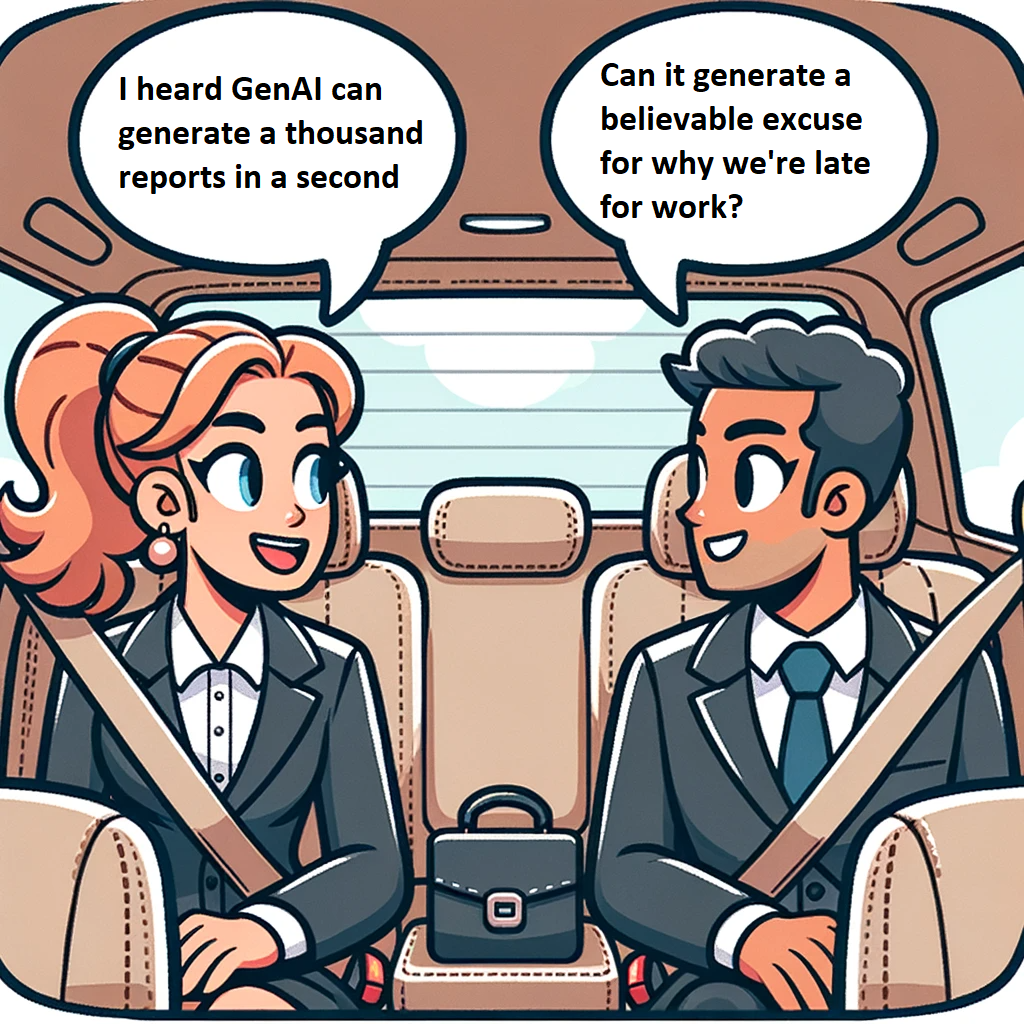
Image by DALL-E-3
The Empowering Potential of ChatGPT
1. Streamlined Workflows : Integrating ChatGPT can significantly optimize administrative tasks, freeing professionals to focus on groundbreaking research or personalized patient care.
2. Democratization of Information : ChatGPT can answer questions or provide explanations for complex topics, thereby making specialized knowledge more accessible.
3. Interactive Training : Traditional methods of training can be augmented with interactive modules driven by ChatGPT, creating a more engaging and efficient learning experience. (Yes, more than just a tutor, it can be a collaborative learning tool, next month I’ll have a blog on this, because doing this is complicated for those of us new to ChatGPT.)
4. Integrating Complex Math: Yes, with plugins like Wolfram Alpha, it can integrate math into almost anything. Sure, right now you’re not impressed, but wait until your kid incorporates the fibonacci sequence and a Rick Roll into a recipe for black forest cake.
ChatGPT in Life Sciences and Healthcare
With its nuanced algorithms and data-crunching abilities, ChatGPT holds particular promise for professionals in life sciences and healthcare:
1. Research Support : Imagine having a virtual research assistant that can quickly summarize the latest scientific papers or flag relevant research statistics. (One of the projects I’ve designed uses this strategy, only it does analysis and summary with the researcher, expanding their results and perspectives for the project as it evolves, so far it looks potentially useful.)
2. Diagnostic Assistance : While not replacing doctors, ChatGPT can assist healthcare professionals by providing a preliminary analysis of medical data, helping to speed up diagnostics.
3. Patient Engagement : ChatGPT can be employed to assist in answering frequently asked questions by patients, leaving healthcare providers more time for complex cases that require human touch and expertise. (Yea, they’re gonna use it this way, but oddly enough, it can improve add empathy to a response Dr. Eric Topol has some really great insights here.)
4. Regulatory Compliance : For those navigating the labyrinthine regulations of pharmaceuticals or clinical trials, ChatGPT could serve as an invaluable resource for quick reference and data management. (It’s really good at cleaning up data as well, naturally it can only supplement legal elements and it requires a trust-but-verify approach as well.)
Preparing for the Future
As ChatGPT and GenAI-enhanced technologies advance, it’s crucial for professionals to be proactive rather than reactive. Consider enrolling in workshops that teach you how to integrate these tools into your workflow. Stay updated on the latest research and understand the ethical considerations associated with AI. After all, to wield a tool effectively, one must first understand its intricacies. That’s why PICLLC Created our 100 Prompting Overview Basics Course, and 101 Prompting Basics Series Course, to help folks better understand how to leverage this tool.
ChatGPT is more than just a sophisticated chatbot; when asked to describe itself it gave me this humble response: “It is a harbinger of the symbiotic relationship that can exist between humans and machines.” So whether you are a researcher decoding the human genome or a healthcare professional aiming for more personalized patient care, ChatGPT offers a glimpse into a future where your efforts are not replaced, but significantly augmented.
The question then is not if ChatGPT will impact your profession, but when—and how you will harness its capabilities to propel your career into the future. We’ve got an idea how the market is moving, and we talked about it last week.
There’s no time like the present to explore, adapt, and innovate. Are you ready for the ChatGPT revolution?
Watch PICLLC’s Lead instructor explain more about what ChatGPT is
 Prompting Integration and Consulting LLC